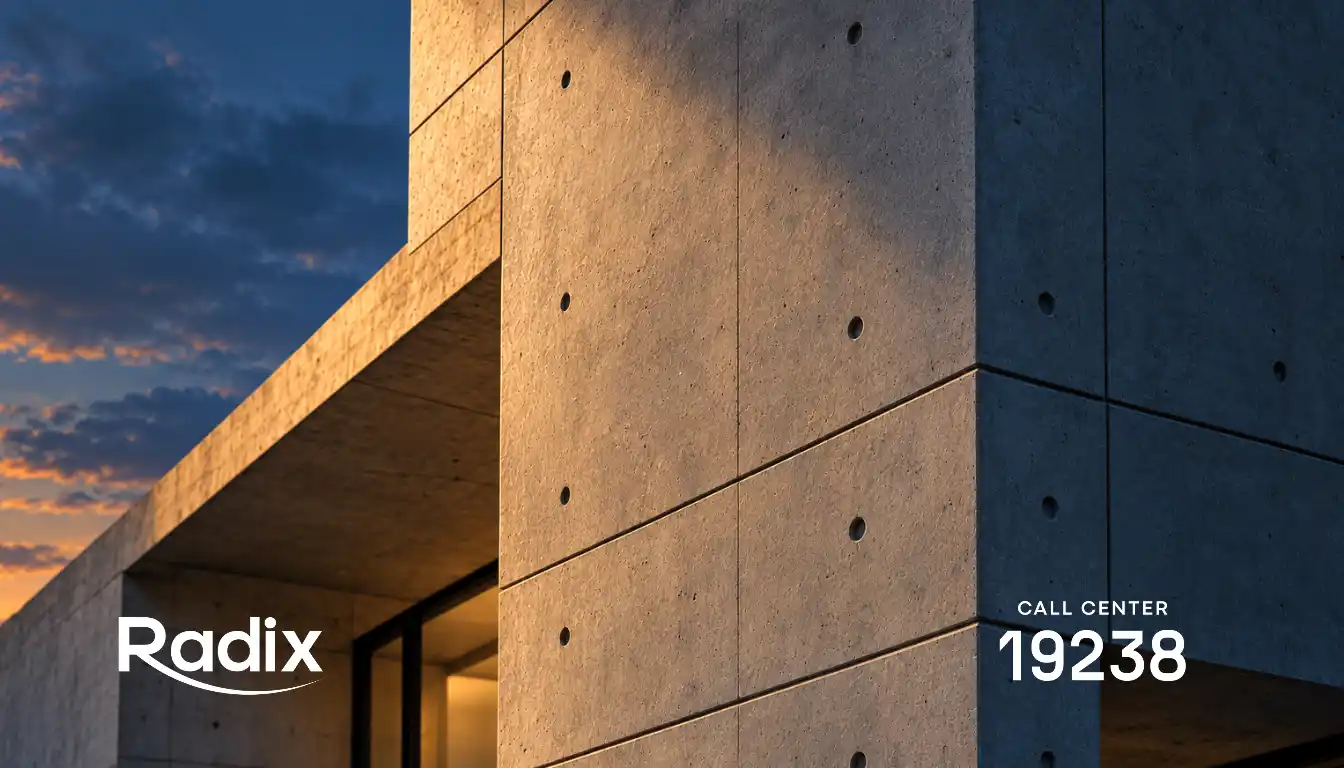
Benefits of Fair Face Concrete Finish in Design and Execution
Fair face concrete can make structure part of a building’s architectural expression—but only when quality leads the decision. At Radix Development, we look beyond appearance to assess design intent, execution demands and long-term fit. This article explores where the finish can add value and how early coordination helps realize that value without compromising the quality standard the project deserves.
A Material That Shapes the Architecture
Exposed concrete can give a building a restrained, tactile character and can sit comfortably alongside timber, glass, metal, stone and brick. Formwork joints, tie positions and surface texture may become part of the visual language when they are planned and repeated with care.
This approach is not suitable for every building or every space. The design should consider use, lighting, maintenance expectations and the desired relationship between concrete and other finishes.
Potential Benefits for the Project
Where the design and specification support it, a fair face finish may reduce the need for some later plastering, cladding or covering layers. It can also simplify the material palette and make the concrete structure part of the final interior or exterior expression. These outcomes depend on the project scope; they should not be assumed to deliver automatic savings in cost or time.
By setting the finish requirement early, the project team can coordinate panel layout, openings, joints and service interfaces before construction. That improves decision-making and helps the team understand the quality standard before work begins.
Quality Is the Condition for Value
Because the surface remains visible, formwork alignment, panel condition, concrete consistency, placement, vibration and stripping become especially important. Radix Development prioritizes the highest attainable quality by defining an acceptance benchmark, reviewing representative samples and verifying the construction method before repetitive work starts.
The specification should also address natural variation and repair limits. A carefully agreed standard is more useful than a vague promise of a flawless surface. Inspection should be planned at the right stages, not left until the end.
Evaluate Suitability and Whole Life Needs
Fair face concrete may help avoid certain finish layers, but the project should compare the full system: design and mock-up effort, formwork requirements, workmanship, inspection, repair planning and long-term care. An exposed finish can require more discipline during construction even if it reduces some later coverings.
Owner, architect, structural engineer and contractor should confirm that the proposed finish suits the building’s function, exposure and maintenance plan. If the required quality cannot be reliably delivered under site conditions, another finish may better serve the project.
Frequently Asked Questions
Can fair face concrete reduce finishing work ?
It may reduce some covering layers when the design and specification make the concrete the final surface, but the overall effort and cost depend on the project.
Does exposed concrete always look the same ?
No. Mix, formwork, placement, curing and site conditions can create variation; expectations should be defined through an agreed sample and specification.
Is fair face concrete appropriate for every project ?
No. Its suitability depends on architectural goals, building use, exposure, achievable workmanship and maintenance requirements.
Quality as the Standard
The value of fair face concrete is strongest when design ambition and construction discipline move together. Radix Development pursues the highest attainable quality by setting clear expectations, coordinating the work early and judging benefits against the needs of the whole project. The result is a more confident basis for choosing an exposed finish—one that respects both the architecture and the realities of delivery.
Connect with Radix Development to discuss how design intent and quality criteria can be aligned at project outset.