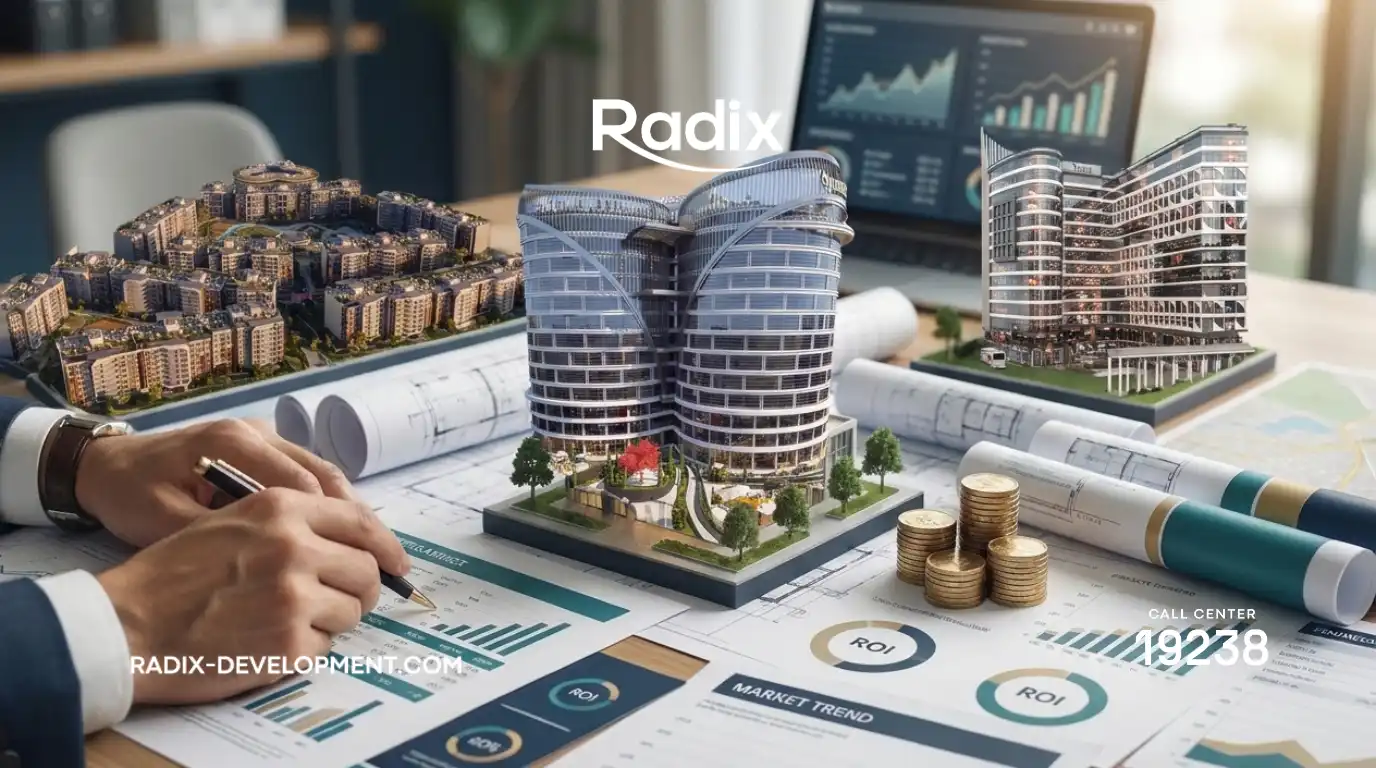
How to Evaluate Property Investment Opportunities Like a Professional Investor
Investing in real estate requires a strategic approach based on market research, financial analysis, and an understanding of long-term growth potential. For investors exploring property investment opportunities in Egypt, evaluating a project goes far beyond its appearance or location. Factors such as market demand, developer reputation, infrastructure, project quality, and potential returns should all be considered before making an investment decision.
Analyzing Market Demand Before Investing
Understanding market demand is the first step toward identifying a promising real estate investment. Investors should determine whether the area attracts residents, businesses, professionals, or visitors and whether demand is expected to increase over time.
Several factors can help assess market demand:
- Population growth and expansion of surrounding communities.
- Demand for residential, commercial, administrative, and medical properties.
- Accessibility through major roads and transportation networks.
- Proximity to business districts, educational institutions, and major destinations.
- Rental demand and potential occupancy levels.
- Future infrastructure and development projects in the surrounding area.
The New Administrative Capital is an important example of a developing real estate market where different property categories can serve different investment strategies.
Evaluating the Reputation of Real Estate Developers
The reputation of a real estate developer can have a significant impact on an investment decision. A developer with experience, a diverse portfolio, and a strong approach to project development can provide investors with greater confidence.
Before purchasing a property, investors should evaluate:
- Previous projects delivered by the developer.
- Construction and architectural standards.
- Project management and development capabilities.
- Quality of facilities and services.
- Delivery history and customer experience.
- The developer's presence across different real estate sectors.
Radix Developments: Different Projects for Different Investment Strategies
Radix Developments offers a diverse portfolio in the New Administrative Capital, giving investors the opportunity to compare residential, commercial, administrative, and medical real estate investments.
Spinner Mall New Capital
Spinner Mall is one of Radix Developments' projects in the MU23 area of the New Administrative Capital. Its location provides visibility from three main streets, supporting its commercial positioning within an active developing area.
The project includes commercial, administrative, and medical units, allowing investors to consider different approaches to income generation and business-oriented property investment.
Its mix of activities can appeal to investors looking for flexibility when selecting a property based on expected demand, tenant profiles, and long-term investment objectives.
Radix Agile Mall New Capital
Radix Agile Mall is another prominent project by Radix Developments, located in the Downtown area of the New Administrative Capital.
The project offers a mixed-use investment environment that includes commercial, administrative, and medical activities. Its location overlooking a central park and green spaces contributes to its overall appeal while supporting the project's business-oriented positioning.
For investors, a mixed-use development can provide the advantage of comparing several property categories within the same project and selecting the one that best matches their investment strategy.
Ray Residence New Capital
Ray Residence represents the residential segment of Radix Developments' portfolio. The project is located in the R8 district, one of the prominent residential areas of the New Administrative Capital.
The development focuses on residential units supported by contemporary architectural concepts and landscaped surroundings. Its location makes it relevant for investors interested in residential demand, rental opportunities, and potential long-term capital appreciation.
The project demonstrates how residential real estate can complement commercial and administrative investments within a broader property portfolio.
Understanding Return on Investment Metrics
Professional investors evaluate potential returns using measurable financial indicators rather than relying solely on the property's purchase price.
Key metrics include:
- Rental Yield: Measures annual rental income relative to the amount invested.
- Capital Appreciation: Evaluates the potential increase in property value over time.
- Return on Investment: Compares potential gains with the capital invested.
- Occupancy Rate: Particularly important for commercial, administrative, and medical properties.
- Payback Period: Estimates how long it may take to recover the initial investment.
The appropriate metric depends on the property type. Commercial and administrative investments may emphasize rental income and occupancy, while residential investments can place greater importance on rental demand and long-term appreciation.
Identifying Growth Potential Before Prices Increase
One of the most important skills of a professional investor is identifying an area with strong future potential before its development reaches maturity.
Investors should monitor:
- New transportation and road infrastructure.
- Government and private-sector investments.
- Expansion of commercial and residential communities.
- New business and administrative districts.
- Population and employment growth.
- Major institutions and destinations planned for the area.
The New Administrative Capital continues to represent an important market for investors because its development combines residential communities, business districts, government institutions, and commercial destinations.
Projects located within established or strategically positioned districts can benefit from the gradual development of their surrounding areas.
Assessing Project Quality and Infrastructure
A strong location must be supported by project quality and appropriate infrastructure. Investors should examine the overall development rather than evaluating the unit in isolation.
Important considerations include:
- Construction quality and architectural design.
- Internal roads and accessibility.
- Landscaping and green spaces.
- Security and facility management.
- Parking and visitor accessibility.
- Retail and service facilities.
- Maintenance and property management.
- Connectivity with surrounding roads and destinations.
These elements can influence the attractiveness of a property to potential residents, tenants, customers, and future buyers.
Creating an Investment Evaluation Checklist
A structured checklist can help investors make objective decisions and avoid relying exclusively on promotional materials.
Professional Real Estate Investment Checklist
- Location: Is the project positioned in a strategically developing area?
- Market Demand: Is there sustainable demand for the selected property type?
- Developer: Does the developer have relevant experience and a strong portfolio?
- Project Quality: Are construction, design, infrastructure, and amenities competitive?
- Property Type: Does the unit match the investor's intended strategy?
- ROI Potential: Are rental income and capital appreciation prospects attractive?
- Liquidity: Could the property be rented or resold efficiently?
- Payment Structure: Does the investment plan fit the investor's financial capacity?
- Future Growth: Could infrastructure and surrounding development support appreciation?
- Exit Strategy: Is the investor planning to rent, resell, or hold the property long term?
Making a Confident Investment Decision
Evaluating property investment opportunities in Egypt requires a combination of market knowledge, financial analysis, and careful project evaluation. Investors should consider the location, demand, developer reputation, project quality, infrastructure, and potential returns before committing their capital.
Radix Developments provides several examples of how different property categories can serve different investment objectives. Spinner Mall offers commercial, administrative, and medical opportunities, while Radix Agile Mall provides a mixed-use investment environment in Downtown. Meanwhile, Ray Residence focuses on residential investment in the R8 district.
Ultimately, the strongest investment decision comes from matching the characteristics of a property with a clearly defined financial strategy. By evaluating each opportunity systematically, investors can make more informed decisions and build a diversified real estate portfolio designed for long-term growth.