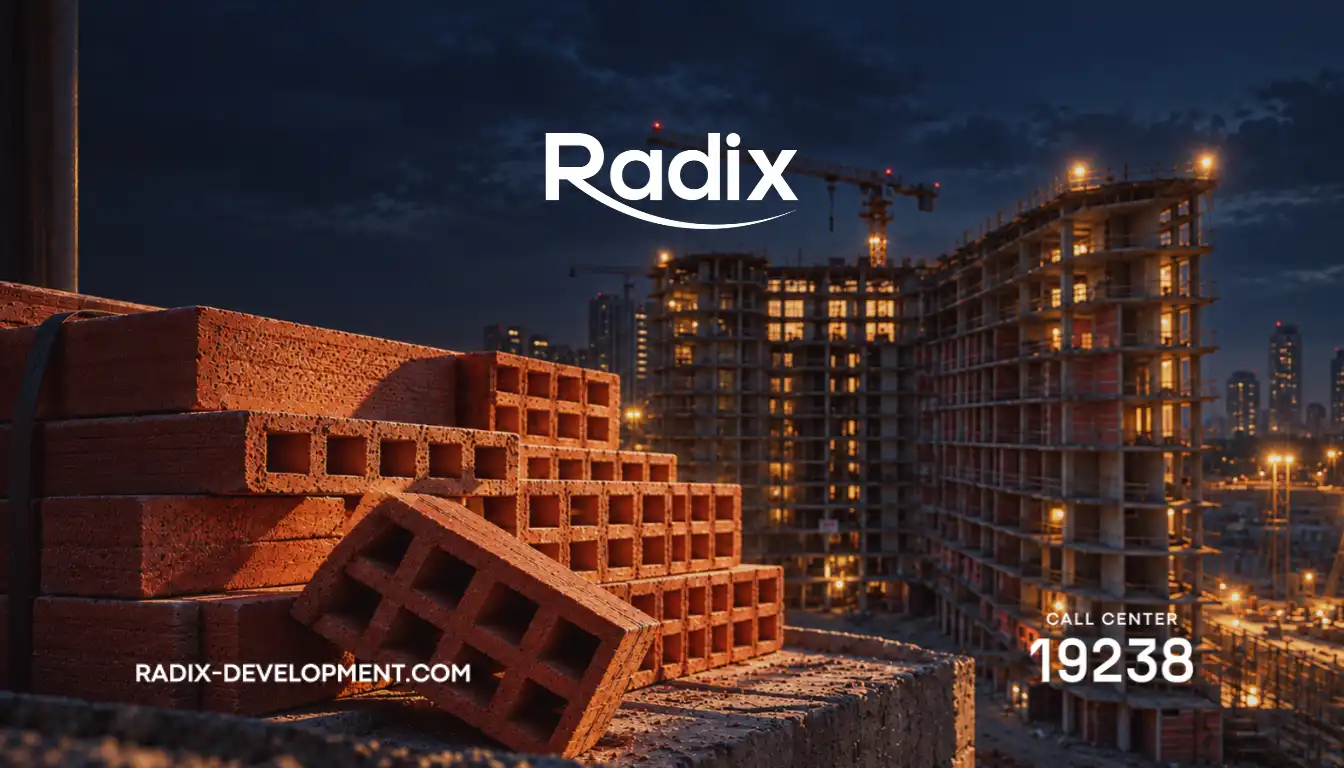
Lightweight Red Brick Features Uses and Selection
Choosing lightweight red brick is not about the label—it is about protecting project quality from specification to finished wall. At Radix Development, we start with the wall’s purpose, verify the product’s performance and coordinate installation before procurement. This guide explains the checks that help our teams select a suitable option for each project, rather than simply choosing the lightest product on paper.
Understand What Lightweight Red Brick Means
The term is commonly used for lighter or perforated fired-clay units compared with similar solid units. It should not be confused with lightweight concrete block or aerated concrete, which are different products. Weight, dimensions, compressive strength, water absorption and thermal properties vary by manufacturer and product.
Radix Development asks the project team to review the exact unit proposed and confirm that technical documents apply to the intended use. The words “lightweight” or “insulating” do not replace data, local approvals or engineering review.
Where It May Be Used
Depending on the approved design, lightweight red brick may be considered for non-load-bearing partitions or certain exterior wall applications. Each location has its own requirements. Exterior walls may need review for weather exposure and moisture control; internal walls may be assessed for acoustic, fire and service-routing needs.
No unit should be assumed suitable for a load-bearing wall because of its name or weight. Structural use requires the approval of the project’s structural engineer and compliance with the design, specifications and applicable codes.
Evaluate Performance at Wall Level
The thermal performance of a wall depends on its complete build-up, including the brick, mortar, insulation if specified, finishes, junctions and workmanship. A cavity or perforation may affect heat flow, but it does not establish the performance of the finished assembly on its own.
Project review should also consider unit consistency, handling, breakage, fixing details, availability and installed cost. A sample can help the team check dimensions and visible quality, while formal approval should be based on the project’s requirements.
Specify and Install for Quality
Before procurement, confirm the intended wall function, product data, acceptance criteria and required documentation. Review quantities against drawings and coordinate openings, lintels, structural interfaces and service penetrations before blockwork begins.
During installation, the team should follow the approved mortar and manufacturer instructions, maintain line and level, and protect units from damage and contamination. Radix Development emphasizes inspection at receipt and at key work stages so that defects are corrected before they affect the completed wall.
Frequently Asked Questions
Is perforated red brick always lightweight ?
No. Perforation describes the shape of the unit; the actual weight and performance must be checked in the product documentation.
Does lightweight red brick provide guaranteed thermal insulation ?
No. Thermal performance depends on the complete wall assembly, design and execution.
Can it be used for load bearing construction ?
Only where the structural engineer and approved project documents authorize the specific unit and application.
Quality as the Standard
The best lightweight red brick is the one that proves suitable for the wall it is meant to serve. Radix Development’s commitment to the highest attainable quality means every choice is assessed against project-specific data, sound engineering and disciplined installation. When careful selection and inspection work together, the project is better positioned to deliver a wall that meets its brief with confidence.
Contact Radix Development to discuss material selection and quality priorities for your project.