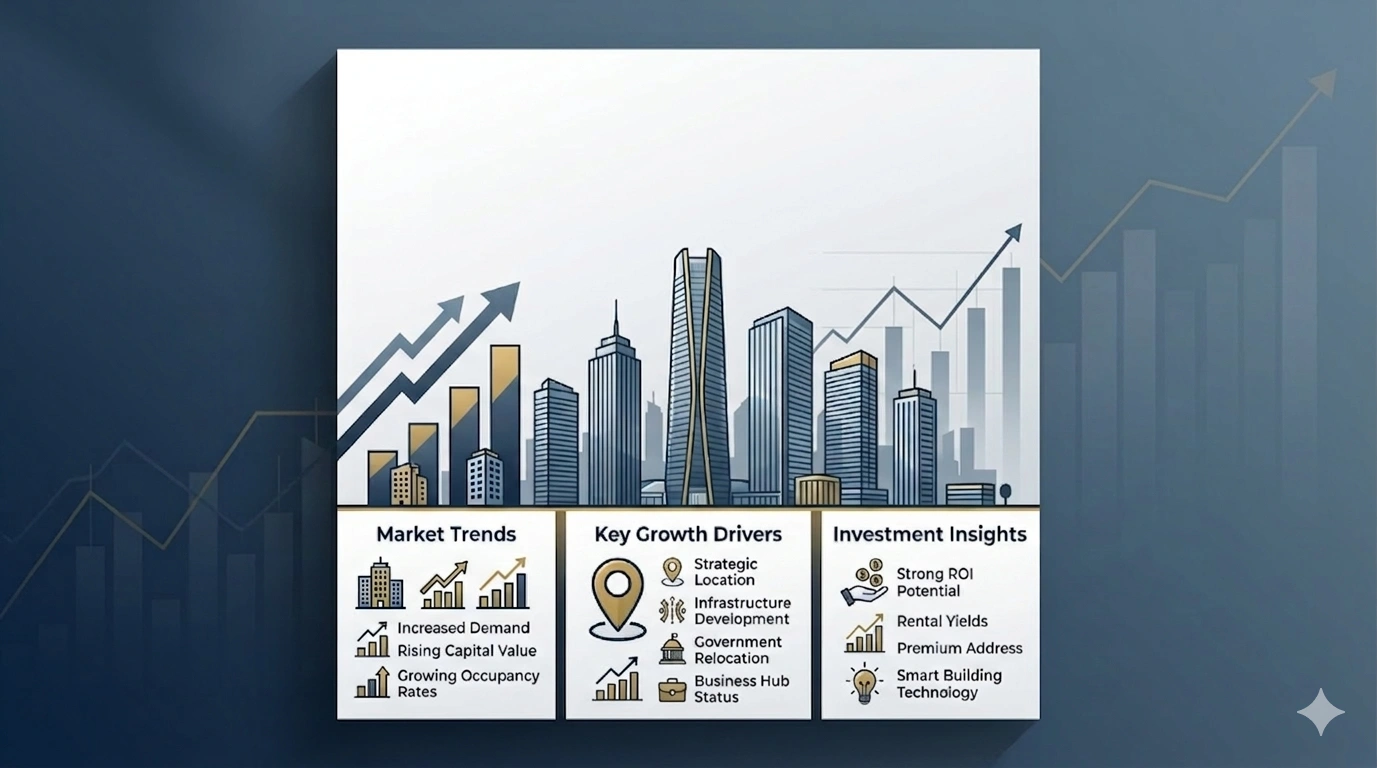
Office Unit Prices in the Capital 2026.. Trends, Drivers, and Investment Insights
The commercial real estate market in capital cities has historically been a key indicator of economic activity and investor confidence. In 2026, office unit prices in the capital have shown significant fluctuations due to a combination of macroeconomic trends, regulatory changes, and shifts in demand for flexible workspaces. Understanding these trends is essential for investors, developers, and policymakers looking to navigate the evolving landscape of urban commercial property.
Office units, ranging from small administrative suites to premium high-rise spaces, are increasingly influenced by factors beyond traditional supply and demand. The rise of remote work, hybrid office models, and coworking spaces has reshaped how businesses evaluate space requirements, affecting price dynamics across different districts of the capital.
Price Trends Across Districts
In 2026, central business districts (CBDs) remain the most expensive locations for office units. Premium-grade offices in prime areas are commanding prices ranging from $3,500 to $5,000 per square meter, reflecting strong demand from multinational corporations, law firms, and financial institutions. These prices have increased by approximately 8% year-on-year, driven by limited availability and ongoing urban development projects.
Suburban office spaces, in contrast, are significantly more affordable, with average prices between $1,200 and $2,200 per square meter. While these areas attract local businesses and startups, they face competition from remote working arrangements that reduce the need for large physical offices. Investors seeking stable cash flow may prefer suburban units due to lower entry costs and longer-term leasing opportunities, though capital appreciation may be slower than in central locations.
Factors Influencing Prices
Several factors contribute to the pricing of office units in the capital. Construction costs and material prices have risen sharply due to global supply chain disruptions and inflationary pressures, directly impacting new developments. Developers are passing these costs to buyers, contributing to higher per-square-meter prices, particularly for Grade A offices equipped with modern infrastructure and energy-efficient technologies.
Additionally, regulatory changes have influenced market dynamics. Stricter zoning laws and environmental compliance requirements have slowed new office development in certain districts, further tightening supply. At the same time, government incentives for green buildings and smart office certifications have attracted premium tenants willing to pay higher rents, pushing prices upward.
Impact of Remote Work and Hybrid Models
The widespread adoption of remote and hybrid work models has shifted demand away from traditional office layouts. Many companies are downsizing their physical footprints, favoring flexible office spaces and coworking arrangements. This trend has moderated price growth in secondary districts, where older office units struggle to compete with modern, adaptable workspaces.
Conversely, office units in strategically located buildings with advanced facilities continue to see strong demand. Features such as high-speed internet, smart energy systems, and shared meeting areas have become premium attributes. Consequently, investors targeting high-end office units can still achieve substantial returns, while those in conventional spaces may face challenges in leasing and resale.
Rental Yields and Investment Potential
Office unit prices are closely linked to rental yields, which vary by location and property grade. In the CBD, gross rental yields range from 6% to 8% annually, reflecting stable demand from reputable tenants. Suburban offices typically offer lower yields of 4% to 6%, but lower acquisition costs and reduced vacancy risk make them attractive for conservative investors.
Investors are also evaluating long-term capital appreciation. Central district offices, despite higher prices, have consistently outperformed suburban units in terms of property value growth. Market analysts project an average 5% to 7% annual increase in prime office unit prices over the next five years, driven by urban densification and infrastructure improvements such as metro expansions and highway projects.
Financing and Market Accessibility
Financing office units in 2026 remains challenging but feasible for well-capitalized investors. Banks and financial institutions offer commercial real estate loans with down payments ranging from 25% to 40%, depending on location and property grade. Interest rates have stabilized after fluctuations in early 2025, making medium-term loans viable for strategic acquisitions.
Smaller investors may face higher barriers in the CBD due to premium pricing, leading them to explore co-investment schemes or office units in emerging districts. These alternatives provide exposure to the commercial market with lower upfront costs, while still benefiting from overall urban economic growth.
Risks and Market Considerations
While office unit prices in the capital present attractive investment opportunities, several risks remain. Economic slowdowns, changes in business regulations, and potential oversupply in certain districts can negatively impact rental income and resale value. Furthermore, geopolitical factors and fluctuating foreign investment flows may influence market stability, especially in high-end office segments.
Environmental considerations are also increasingly relevant. Investors are encouraged to prioritize green-certified buildings and sustainable practices, as tenants and regulators place growing emphasis on energy efficiency and environmental compliance. Ignoring these trends could result in higher vacancy rates and lower long-term returns.
In 2026, office unit prices in the capital reflect a complex interplay of supply constraints, tenant demand, macroeconomic factors, and evolving workplace trends. Central business districts continue to command premium prices due to high demand and limited supply, while suburban areas offer lower-cost alternatives with moderate yields.
Investors must balance price, rental potential, and long-term appreciation when choosing between locations and property grades. Those seeking stable cash flow and manageable risk may favor suburban or flexible office units, whereas investors aiming for capital growth and high-end tenants may focus on CBD properties. Strategic planning, awareness of market trends, and adaptation to new work models are essential for success in the capital’s dynamic office real estate market in 2026.